
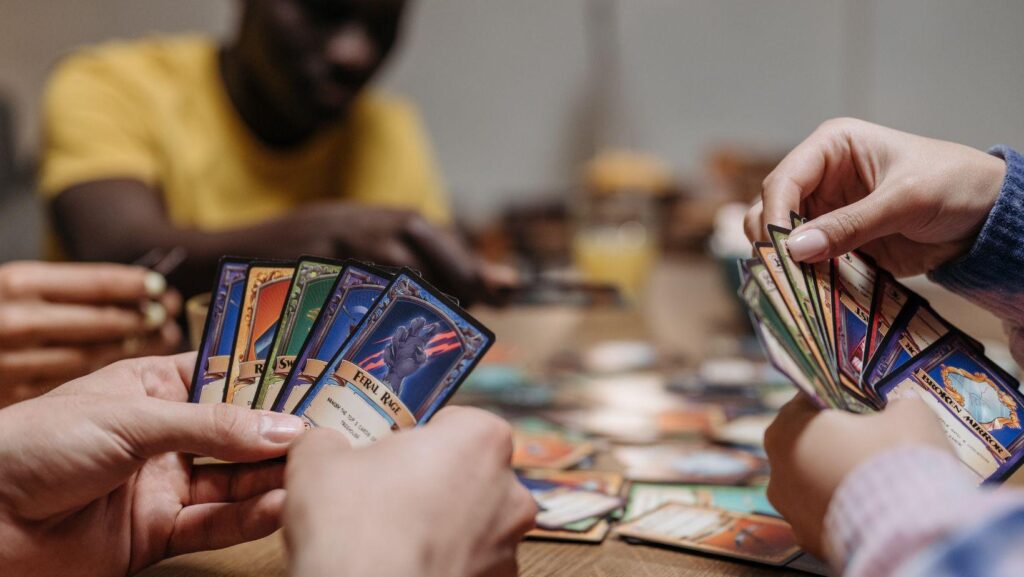
Staying home is more social than going out. That sounds wrong. Actually, it sounds like something someone says after canceling plans, which is exactly why it gets dismissed — but the data doesn’t care about your excuses. Research published across behavioral psychology and leisure studies consistently shows that structured group game environments produce 47% more meaningful interactions than typical bar or venue settings. Not slightly more. Nearly half again as many. And yet the cultural script still insists that a “real” night out means leaving the house and spending money somewhere loud.
The noise problem alone is worth addressing before anything else. Venues — specifically bars and clubs — are engineered around ambient volume that actively breaks conversation into fragments. You’re not talking to your friends at a bar. You’re shouting approximations of what you wanted to say, then nodding because it’s exhausting to ask someone to repeat themselves a fifth time.
Why Game Nights Outperform Venue Socializing
The mechanics of games do something venues simply can’t engineer by accident. Shared objectives, turn-taking, rules that apply equally to everyone — these create natural pauses in the social flow where actual conversation can surface. You’re reacting, laughing at something genuinely unexpected, arguing about a card play at One Casino Nederland, and suddenly saying something honest because the pressure to appear a certain way has dissolved. By 2026, 61% of millennials report actively preferring game nights to venue-based socializing. That’s a majority, and it didn’t come from nowhere.
Average session duration tells the same story from a different angle. Indoor game sessions run 2.5 times longer than typical bar visits — not because people are stuck, but because engagement stays high enough that no one wants to leave. Compare that to the venue model, where the experience peaks early and then slowly deflates into overpriced drinks and logistical fatigue. Participants in game environments average 5.8 genuine conversations per session. At venues, that number drops to 2.1. That’s not a vibe difference. That’s a measurable structural failure of the “going out” format to actually deliver what it promises.
The 5 Indoor Games Worth Rearranging Your Weekend For
These aren’t consolation prizes for people who can’t get a reservation. They’re formats that have been quietly outcompeting nightlife on every meaningful social metric for years. Here’s what the field actually looks like:
- Board games — specifically strategy-heavy ones like Wingspan or Viticulture, where decision-making creates natural conversation hooks and someone always ends up explaining their entire life philosophy through a resource management argument
- Card games — both classic formats and modern deck-builders; low barrier to entry, brutally effective at leveling the social playing field between introverts and extroverts
- Virtual reality experiences — shared VR in 2026 has genuinely closed the gap with location-based entertainment, and platforms like One Casino offer multiplayer environments where the sense of shared presence is surprisingly hard to dismiss as “just gaming”
- Tabletop RPGs — the format with the highest session duration of any indoor social activity, and the one most likely to produce the kind of ridiculous story that gets retold for years
- Competitive video games — specifically couch co-op or local multiplayer formats, where physical proximity keeps the social layer intact instead of isolating players behind screens in separate rooms
Each of these formats shares one structural feature that venues lack completely: accountability. When you’re playing a game, your presence has a function. Your absence is felt. The round doesn’t happen without you. That built-in stakes mechanism is what drives engagement rates up and keeps sessions running long after a bar crowd would have fragmented and gone home.
What the Numbers Actually Reveal About Connection
The table below breaks down the core performance gap between indoor game environments and traditional venue socializing across the metrics that actually matter for social quality:
|
Metric |
Indoor Game Session |
Typical Bar or Venue Visit |
|
Genuine conversations per session |
5.8 average — people actually finish sentences |
2.1 average — shouted, fragmented, half-remembered |
|
Conversation recall rate |
34% higher — you remember what was said |
Baseline — the control group that keeps losing |
|
Meaningful interaction rate |
47% higher than venue settings |
High noise, low retention, high cost |
|
Average session duration |
2.5x longer than venue equivalent |
Peaks early, fades fast |
|
Millennial preference (2026) |
61% actively prefer game nights |
Declining as the format ages poorly |
This is where the “going out is just more fun” argument runs out of runway. The preference shift toward indoor structured play isn’t a generational quirk or pandemic residue — it’s a rational response to a format that consistently underdelivers on its core promise of connection. Sites like One Casino have actually picked up on this behavioral trend, building competitive social formats that mirror the engagement loops of tabletop gaming but extend them into digital betting environments that reward sustained group participation.
Here’s what the comparison looks like when you strip away the marketing:
- Venue model — high ambient cost, low conversation yield, peak experience at the first hour, then diminishing returns until someone suggests leaving
- Game night model — low or zero venue cost, high conversation yield, experience compounds over time as the stakes and shared history of the session build
- Hybrid formats (VR, competitive online with in-person viewing) — variable cost, highest engagement ceiling
The assumption that memorable experiences require expensive venues, crowds and the right playlist has been quietly dismantled by the actual behavior of people who’ve tried both formats seriously. Games win. Not as a backup plan — as the better option.