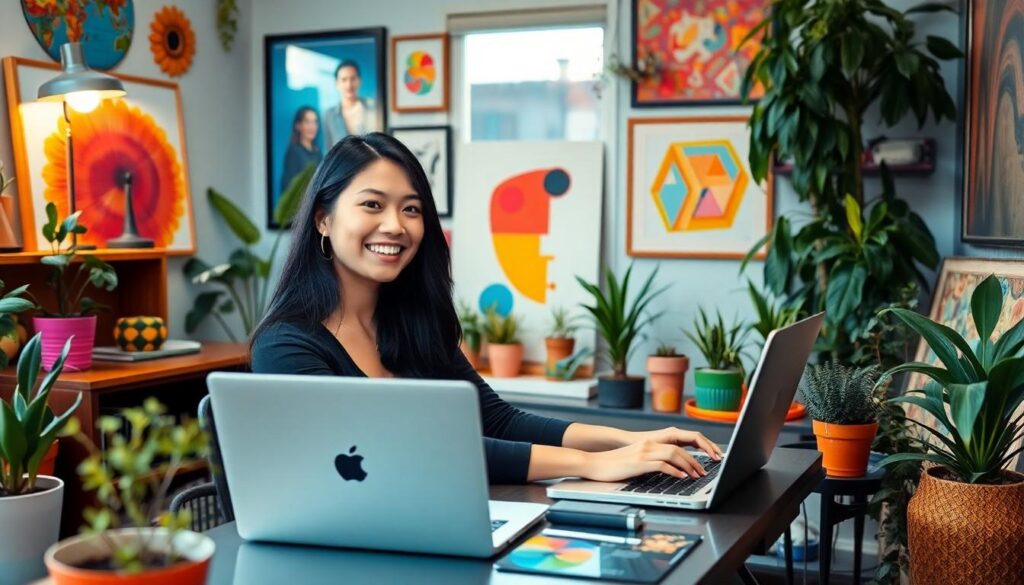
Artificial intelligence has changed the way people create digital art. In the past, producing a detailed illustration, concept scene, or stylized graphic could require hours of drawing and editing skills. Today, AI art generators can turn simple descriptions into impressive visuals within minutes. In 2026, these tools have become useful for designers, marketers, content creators, artists, students, and small businesses. They can help with brainstorming, storytelling, branding, social media graphics, and many other creative projects. The challenge is choosing the right platform because each generator has different strengths, controls, artistic styles, and workflows. In this guide, we explore seven AI art generators worth trying in 2026 and explain what makes each one useful for different types of creative work.
What Is an AI Art Generator?
An AI art generator is a software tool that uses artificial intelligence to create or transform visual content based on instructions. Most platforms allow users to describe an idea using a text prompt, while some also accept reference images, sketches, or existing photographs.
For example, a creator could enter a prompt describing a futuristic city at sunset, a fantasy character standing in an ancient castle, or a watercolor landscape. The AI interprets those instructions and produces an image based on the requested subject, style, composition, lighting, and mood.
Modern tools can also support image editing, style transformation, background changes, image-to-image generation, and other creative workflows. This makes them useful not only for generating artwork from scratch but also for improving existing visuals.
1. CapCut AI Art Generator
CapCut has expanded beyond traditional video editing by offering AI-powered image creation and editing features. Its AI image tools can generate visuals from text prompts and transform existing images into different creative styles. CapCut currently highlights models and workflows designed for realistic images, artistic concepts, social media graphics, product visuals, and other content.
For creators who want an easy starting point, an AI art generator can turn a written idea into a visual concept without requiring advanced drawing skills. Users can describe the subject, environment, style, lighting, and mood, then refine the result using editing tools.
One useful advantage is the connection between image creation and content production. A generated image can become part of a social post, thumbnail, presentation, promotional design, or video project. CapCut also supports image-to-image workflows, allowing creators to use reference images and guide transformations through text prompts.
This makes CapCut particularly useful for social media creators who want to move from an idea to a finished piece of content without constantly switching between different applications.
2. Midjourney
Midjourney has become widely recognized for its artistic approach to AI-generated imagery. It is particularly appealing to creators who want visually rich illustrations, imaginative environments, cinematic scenes, fantasy artwork, and experimental concepts.
One of its notable characteristics is the strong emphasis on aesthetics. Instead of simply reproducing a literal description, the system can produce images with distinctive composition, atmosphere, lighting, and artistic interpretation.
Midjourney can be useful for concept artists, writers, game designers, marketers, and anyone looking for inspiration before starting a larger creative project. For example, a writer developing a fantasy novel could generate visual concepts for characters, locations, costumes, or story scenes.
The biggest learning curve comes from understanding how prompts and visual references affect results. Spending time experimenting with descriptions can help users develop a consistent visual direction.
3. Adobe Firefly
Adobe Firefly is designed around creative workflows and integrates naturally with Adobe’s wider ecosystem. It can be useful for people who already work with applications such as Photoshop or other Adobe creative tools.
One of its strengths is the ability to use generative AI as part of an editing process rather than treating image generation as an isolated activity. Creators can explore concepts, make changes, generate visual elements, and refine designs as part of a broader creative workflow.
Firefly is particularly relevant for graphic designers and marketing professionals who need to create or modify images while maintaining control over the overall composition.
For example, a designer might create a promotional graphic, generate a background concept, replace an unwanted visual element, or explore several creative directions before selecting one for further editing.
4. DALL·E
DALL·E has helped popularize text-to-image generation by allowing users to describe visual concepts in ordinary language. Its approach is useful for people who want to experiment with AI-generated artwork without necessarily having extensive experience with traditional design software.
A major advantage of text-based generation is accessibility. Users can describe a scene in conversational language and experiment with different versions until the result is closer to their idea.
DALL·E can be useful for illustrations, conceptual artwork, educational visuals, creative brainstorming, and simple design experiments. It can also help users visualize abstract ideas that would otherwise be difficult to communicate.
The quality of an output depends heavily on the prompt. Including information about composition, subject, environment, style, perspective, and lighting can provide more useful direction than relying on a short description.
5. Leonardo AI
Leonardo AI is another platform worth considering for creators who want more control over their visual projects. It has attracted attention from users working on game assets, concept art, character designs, environments, and other digital content.
The platform is especially interesting for projects that require a consistent visual direction. Instead of generating one unrelated image after another, creators can work toward a recognizable aesthetic across multiple assets.
For example, someone designing a fictional game world might need characters, buildings, landscapes, objects, and promotional artwork that feel like they belong to the same universe. AI-assisted workflows can help speed up the initial concept-development stage.
Leonardo AI can therefore be valuable for creators who see AI generation as part of a larger design process rather than simply a way to produce individual pictures.
6. Ideogram
Ideogram is particularly interesting for visual projects where text inside an image matters. Creating accurate words, titles, signs, logos, and poster-style compositions has historically been challenging for many image-generation systems.
For designers creating posters, social media graphics, advertising concepts, invitations, or typography-focused artwork, accurate text rendering can make a significant difference.
Instead of generating an image and then rebuilding all the typography manually, users can experiment with compositions that combine imagery and written elements.
This makes Ideogram worth exploring when the visual concept depends heavily on readable text. It can also be useful for brainstorming brand concepts, poster layouts, editorial graphics, and promotional artwork.
7. Stable Diffusion
Stable Diffusion remains an important option for users who want flexibility and greater control over AI image generation. Its ecosystem has developed around customization, experimentation, models, workflows, and community-created resources.
Unlike simpler image generators designed primarily for beginners, Stable Diffusion can appeal to technically minded creators who want to experiment with settings and specialized models.
Artists and developers can use different configurations to explore particular visual styles, compositions, characters, or creative workflows. This flexibility can be valuable for advanced projects, although it may require more technical knowledge than a straightforward browser-based generator.
For users willing to spend time learning how the ecosystem works, Stable Diffusion can provide a highly customizable environment for AI-assisted artwork.
How to Choose the Right AI Art Generator
There is no single tool that fits every creative project. The right choice depends on what you want to produce and how much control you need.
First, consider ease of use. Beginners may prefer a simple interface where they can enter a prompt and quickly generate an image.
Next, look at style flexibility. If you create fantasy artwork, realistic photography, anime illustrations, product concepts, or abstract art, choose a platform that supports the visual direction you regularly need.
Editing capabilities are also important. Some platforms focus primarily on generation, while others provide tools for modifying backgrounds, colors, composition, and other elements. CapCut, for example, combines AI image generation with editing and content-creation workflows.
Finally, consider output quality, resolution, licensing terms, pricing, and platform compatibility before using generated artwork commercially. Terms and available features can change, so always check the current conditions of the specific service before publishing or selling AI-generated work.
Tips for Creating Better AI Art
The quality of an AI-generated image often depends on the quality of the instructions. Instead of writing a vague prompt such as “a beautiful landscape,” provide useful visual information.
Mention the main subject, location, art style, lighting, camera perspective, colors, and mood. For example, you could describe a peaceful mountain village at sunrise, viewed from a high angle, with warm golden light, detailed architecture, and a cinematic atmosphere.
It is also helpful to experiment. Your first generation does not have to be the final version. Change one element at a time and compare the results.
For social media content, think about the final format before generating the image. A square composition may work well for some platforms, while a vertical or landscape format may be better for other types of content. Current CapCut workflows, for example, allow creators to select aspect ratios and refine generated images for different content formats.
Creative Uses for AI Art Generators
AI art tools can be useful across many industries and creative activities. Social media creators can use them for thumbnails, posts, backgrounds, and campaign concepts. Businesses can explore product visuals, advertising ideas, promotional graphics, and branding concepts.
Writers can create character references and locations for stories. Teachers can develop visual material for lessons, while designers can use AI to brainstorm layouts and concepts before creating polished final work.
AI-generated artwork can also be useful during the early stages of a project. Instead of spending hours developing an idea that may eventually be discarded, creators can quickly produce several concepts and decide which direction deserves further development.
FAQs
1. What is the best AI art generator for beginners?
The best option depends on the user’s goals. Beginners often benefit from platforms with simple interfaces, clear prompting workflows, and built-in editing tools. CapCut is one option for creators who want image generation combined with editing and broader content-creation features.
2. Can AI art generators create images from text?
Yes. Text-to-image generation is one of the most common features offered by modern AI art platforms. Users can describe a subject, setting, style, lighting, and composition, and the system generates an image based on those instructions. CapCut’s AI text-to-image workflow supports prompts and reference images for creative generation.
3. Can AI-generated artwork be edited after it is created?
Yes. Many modern platforms provide editing features after generation. Depending on the service, users may be able to adjust colors, crop an image, change backgrounds, modify individual elements, or apply additional effects. CapCut supports several image refinement and editing workflows after generation.
4. What makes a good AI art prompt?
A strong prompt is usually specific rather than vague. Include the main subject, environment, visual style, lighting, mood, colors, composition, and important details. You can then refine the prompt based on the first result. Small changes can produce significantly different visual outcomes.
Conclusion
AI art generators have made visual experimentation faster and more accessible in 2026. Whether you need fantasy artwork, realistic scenes, marketing graphics, character concepts, typography-focused designs, or social media visuals, there are many tools to explore. CapCut, Midjourney, Adobe Firefly, DALL·E, Leonardo AI, Ideogram, and Stable Diffusion each offer different approaches to AI-assisted creativity. The most useful choice depends on your preferred workflow, desired artistic style, editing requirements, and level of technical experience. Rather than relying entirely on the first generated image, treat AI as a creative partner. Experiment with prompts, compare variations, refine the strongest concepts, and add your own creative judgment to produce visuals that feel distinctive and purposeful.